
Leadership Beyond Comfort: Knowing When to Move Forward Now
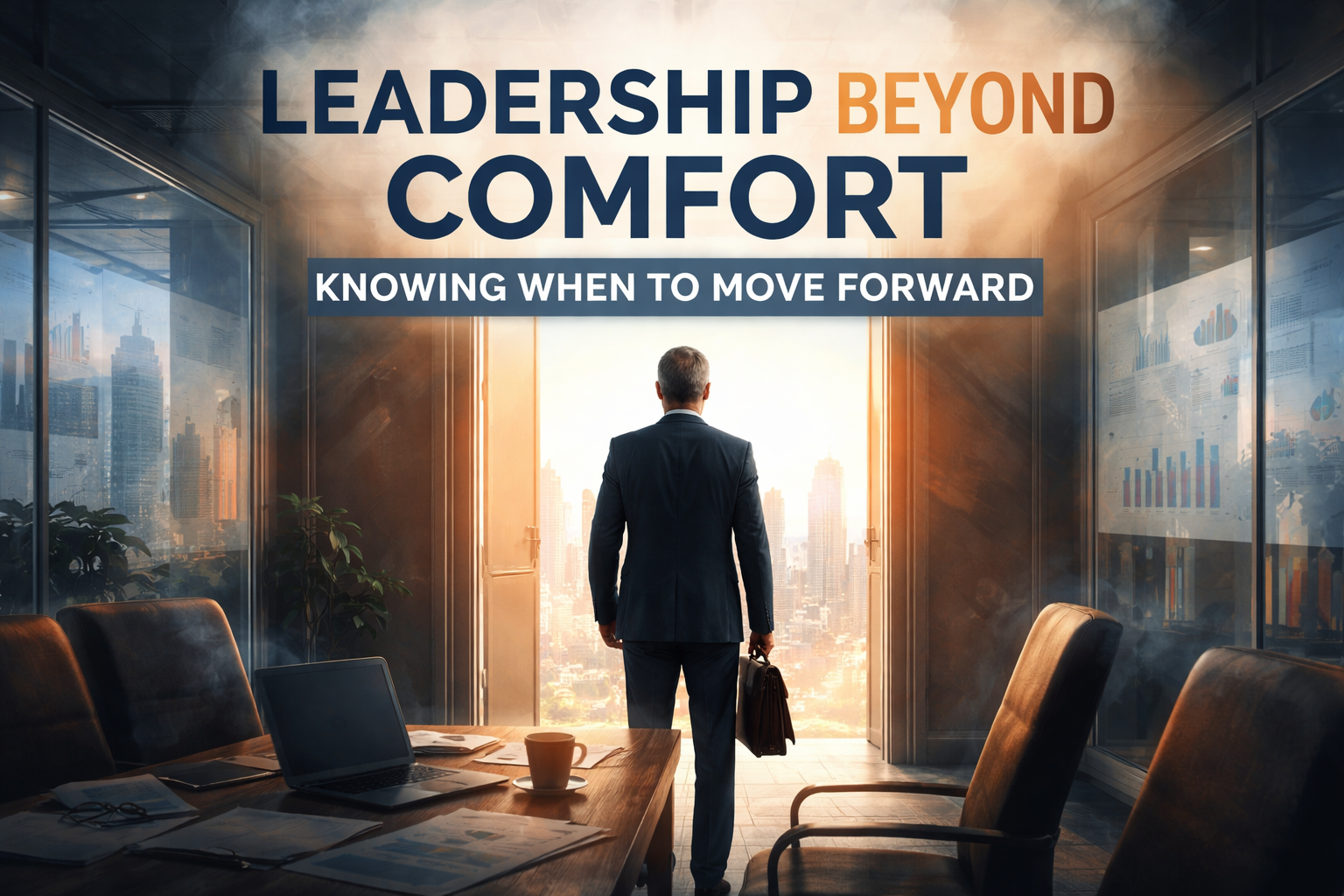
Comfort is useful—until it becomes the limiter.
“The hardest trap to escape isn’t failure. It’s comfort.” — Eric Wiley
Comfort is a performance issue
Most organizations don’t stall because they’re doing everything wrong. They stall because what they’re doing still produces outcomes—just with more effort, more steps, and less return than it used to.
Comfort shows up as familiar workflows, legacy habits, and “the way we’ve always done it.” It keeps things predictable. It also hides the fact that better options now exist—options that reduce friction, cost, and time without sacrificing quality.
“Still works” can be the limiter
When something still works, it earns more time than it should. That’s normal. Results create loyalty.
But leadership isn’t just about preserving results. Leadership is about judgment—knowing when reliability has turned into drag. The question isn’t “Does this work?” The question is “What is this costing us now?”
- Cost in time and handoffs
- Cost in rework and exceptions
- Cost in customer confusion
- Cost in employee energy
- Cost in missed opportunities
The efficiency ratio tells the truth
Here’s a practical way to look at it: outcomes versus effort. If the same outcome now takes more effort (or more people, or more tools, or more follow-ups), the efficiency ratio is sliding.
This is where many teams stay “busy” while the organization gets slower. The work expands to fill the gaps—extra emails, extra checks, extra meetings, extra steps—until the original process looks unrecognizable.
Change feels risky because relationships matter
Teams worry about disrupting relationships with customers. That’s a real concern. Trust is hard-won, and it can be fragile.
Strong leadership separates two things: protecting relationships and protecting routines. Customers rarely miss the routine. They notice the experience—speed, clarity, consistency, and follow-through.
Three lightweight plays leaders can run this week
If you want to move without creating chaos, keep it simple. Here are a few plays that create clarity fast.
- Pick one process. Choose the workflow that produces the most rework, confusion, or delays.
- Map the handoffs. List every touchpoint and who owns it. Count the “waiting” time, not just the “doing” time.
- Kill one step. Remove a check, meeting, approval, or duplicate entry that exists “just in case.” Replace it with a clear rule or a single owner.
- Define the promise. Write the customer-facing expectation in one sentence (timeframe + what they can expect next).
- Run a 14-day test. Keep it short. Evaluate outcomes, effort, and team stress at the end.
Guardrails that keep change from breaking trust
Most failed change efforts don’t fail because the idea is bad. They fail because the rollout is sloppy, communication is thin, or ownership is unclear.
- Assign a single owner. One person accountable beats ten people involved.
- Protect the customer experience first. If something must get worse before it gets better, pause and redesign.
- Keep the language simple. Explain what changed, why it changed, and what the customer can expect.
- Measure effort, not just outcomes. If the team is exhausted to get the result, you didn’t improve the system.
Bottom line
Comfort offers certainty in the short term. Judgment creates durability. Leaders move forward before pressure forces the decision—while momentum still exists and trust is still strong.
What worked can still deserve respect. It just doesn’t deserve automatic loyalty. The best time to modernize a process is when you can do it intentionally, calmly, and with a clear plan.
— Eric Wiley
Wiley Performance Advisory
Your Wingman on the Next Big Push.